Backstory Sydney 1998
When I enrolled at the National Art School in 1998 I lost my beloved job at the Maritime Museum almost immediately because I was only a casual and the art course was full time, like 9 to 5 every day! In financial desperation I decided to sell my soul in the Commonwealth Bank at the beginning of Oxford street, along with the junkies and drag queens, early one morning, by signing up to a student loan so I could eat and pay rent. Which turned out to allow me to pay rent but not eat… So my flat mate and I sought cheaper digs, we moved from Newtown to Leichhardt. She found this house marked for demolition and we moved in taking two rooms each. I wrote this piece about the shack and the Lino whilst living there….
There is no coincidence that my flatmate and I have ended up in an Italian neighbourhood in Sydney. We are from Fremantle in Western Australia. The house she proudly found us is actually a shack amidst a familiarity of food coffee and attitude to coffee. The sign on the local Norton Street coffee house, which is right behind us, says ‘ No skinny milk/no decaf/no latte and so on and on’. Kudos I say.
Just yesterday the local green grocer showed me how he has a tomato and olive oil on bread for breakfast every day whilst telling me that i’m looking thin and need to try it, bless!
I’ve lived in lots of houses across Australia and overseas and I’ve not lived in houses. There have been tents, hotels, campgrounds, abandoned buildings and foreign streets. Some people have childhood homes and friends and family homes that you visit and some people don’t. And some people have no home and are forced to suffer the curse of Cain and be condemned to wander as a ‘fugitive and vagabond shalt you be in the earth’. 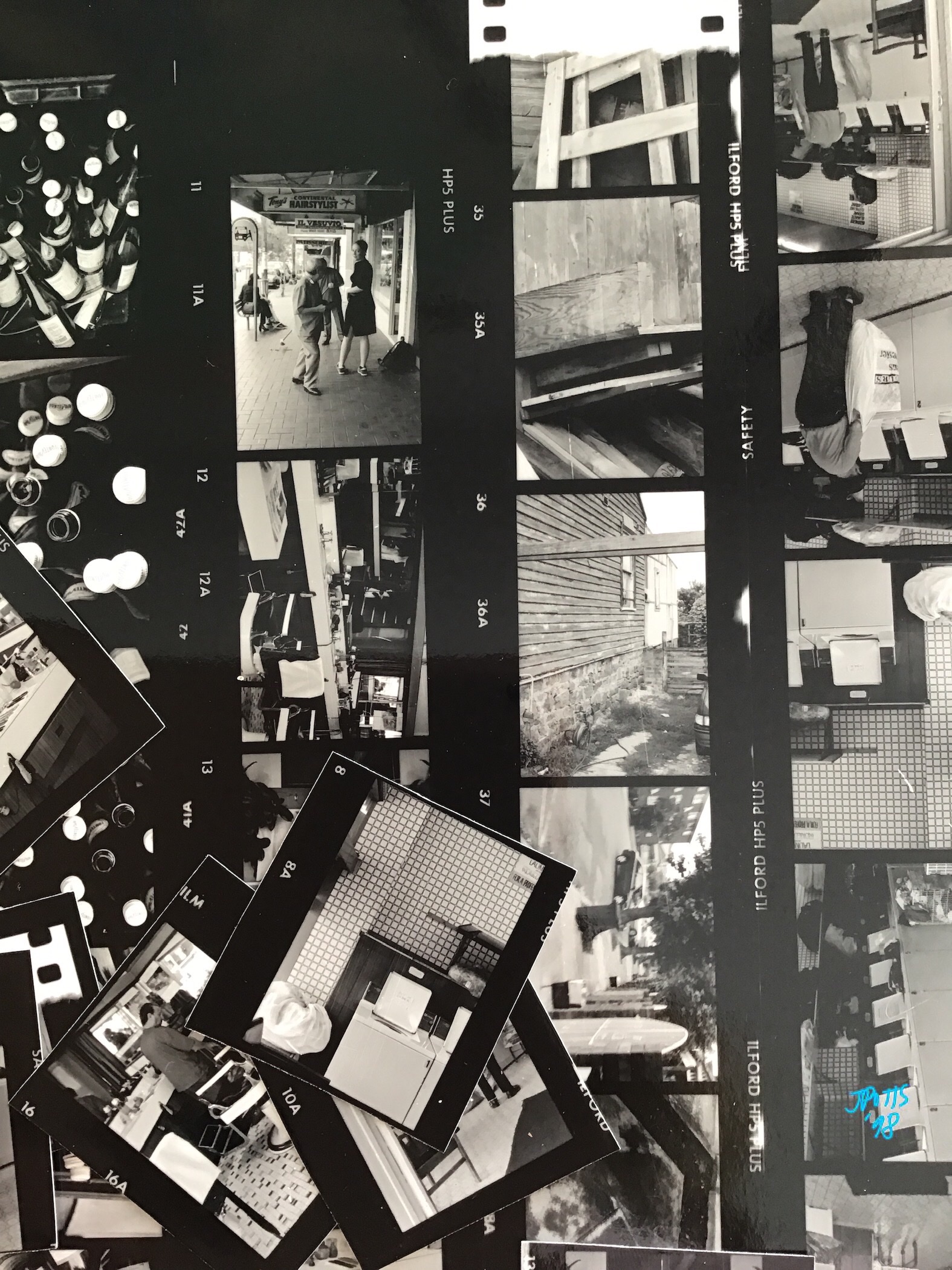
Then there are the homes you get to create as you step out in to the world on your own. I would call this shack my first home. My house mate and I are eeking out our existences here. Admittedly she is doing better than myself because she has a job and I am the arts graduate back at Fine Art school perpetually broke and pondering the history of the shack over a long breakfast and strong coffee.
But let me tell you about this lovely shack of ours…
There are gaps in the wooden rafters through which the birds crawl into the roof and nest. The floorboards are loose and I can see the dirt of the foundations in the rooms where we wrenched the lino from its stronghold. We will get to the Lino later.
The four original rooms sit upon old weather board sandstone blocks. The porch is slowly loosing its edges as a foot weighs too much here and there. And the walls are evaporatively thin. 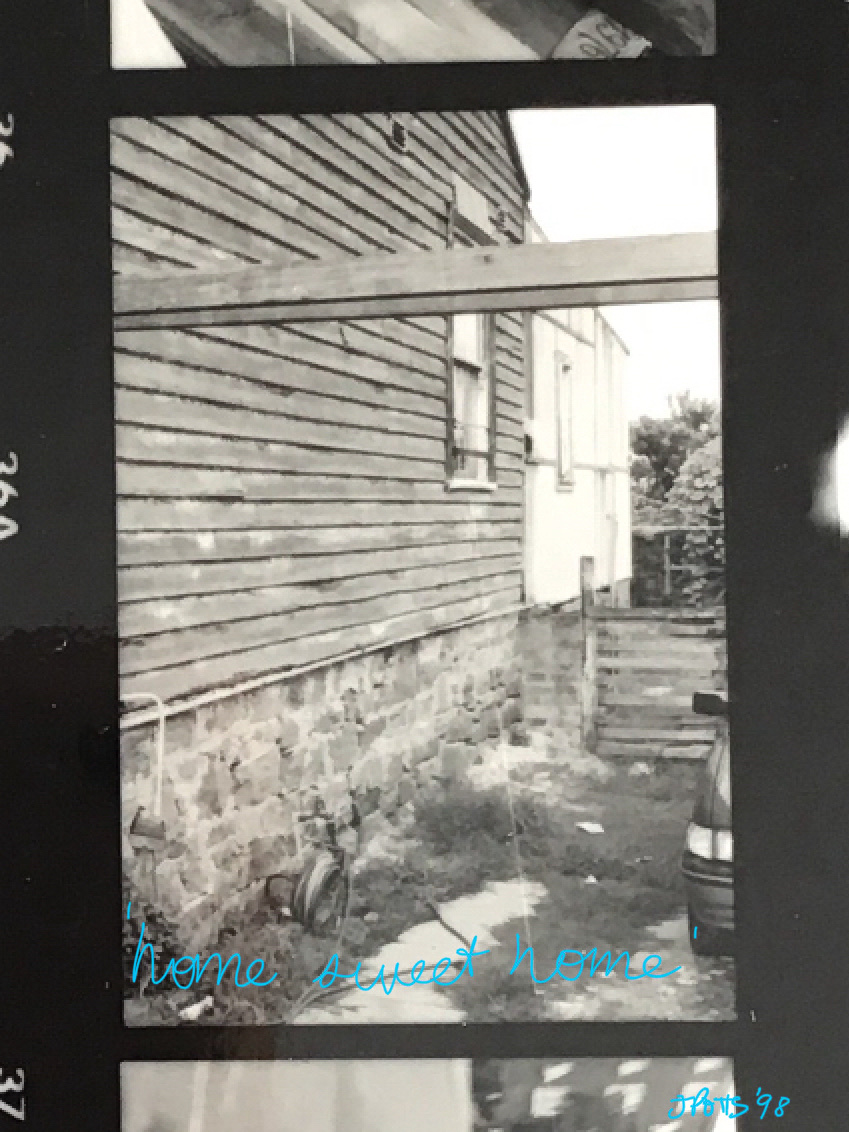
The front fence is white picket but a leaf on a strong breeze could break through and the dog is some times kept in by its optical illusion. The gardens full of kikuyu grass that makes its calculated way towards the foundations after every mow, refusing to just grow up. Fronds head for the bricks and weave their way through the stones and into the brittle rustic plumbing. Nature and humanity are battling here. The dogs bowl is a local finch watering hole and she chases the minors away from her rice stash. The rear foundations remind me of a cubist painting all angled here and there, so i keep an eye on them as these towers of bricks support those loose floorboards.
This wooden weatherboard stone brick and fibro fortress sits amongst columns and concrete in Leichardt, Sydney NSW. Fifty years ago immigrants moved to this street to call this shack their home. But the shacks origins go back further, probably as cottage rather than shaaaaack!
My streets name first appears in 1879 in the Sydney street directory. In 1880 there is a dairy, a stonemason and a carpenter living on the street. By 1892 the houses have numbers not just occupations. I can find number 34, ours, and a Venetian blindmaker lived in the first four rooms that constitute the original cottage. No wonder its wonky, it’s 106 years old and neglected. Boringly after 1892 only names appear.
With our Italian landlords permission, easily got because they lived next door, we asked to purge the original cottage of its lino . Ripping up lino that has been happily lying dormant for years turned out to be no easy task. And little did we know how many layers there would be. But we had beer.
There were 8 layers, yes , 8 layers of Linoleum. And once we committed we were in! The layers came up piece by random ripped piece. The eight strata ranged in fashion and make representing decades of interior design for the thrifty. Which was us, we were thrifty, we trimmed the kikuyu grass in the back with a Papuan bush knife, proudly wielding our callouses.
The deeper layers got thicker, less glossy and more ornate in pattern. There aren’t many occasion to remark ‘hmmmm thats nice linoleum’ because it looked posh. The very last layer was backed by hessian and the fronds still jut out in places where tearing it out would have meant dismantling walls. On a windy day the hallway can do a good impression of a sea anemone. And those little brass tacks are a nightmare of pain. Some just refused to leave and kept their little captive piece of lino tucked under the whole time we lived there.
In between the lino years were newspapers and magazines, preserved but yellowing. Elizabeth Taylor smiled up from the floor young and fresh. The ads offered everything as automatic- wash a matic, style a matic. There were Espionage and cooking tips from 1964. Under the 1964 time warp were the two most majestic layers of grey and pink linoleum. These years were the 1940s and 1950s. And they were Italian. La Fiamme and other newspapers spread above the original layer of linoleum. Then we finally found the floor boards.
And so with that coffee in hand once i’ve made it past the black spider who spins at eye level every night in the back doorway, I can admire the Blue Mountains on a smogless day and imagine the sun as it sets across in the West, feeling linked with my coppa and fresh bread breakfast, Italian accents, and espresso. This shack has shelterd the urban industrious for over a hundred years, its old, ramshackled, on dodgy foundations and we are all in good company together.
Then one night the roof leaked and rain started dripping down the lounge room light, and sadly we got kicked out, the shack got condemned and i’ve never been back. I ended up with two arts degrees which technically makes me a Ba ART BA F ART.
postscript
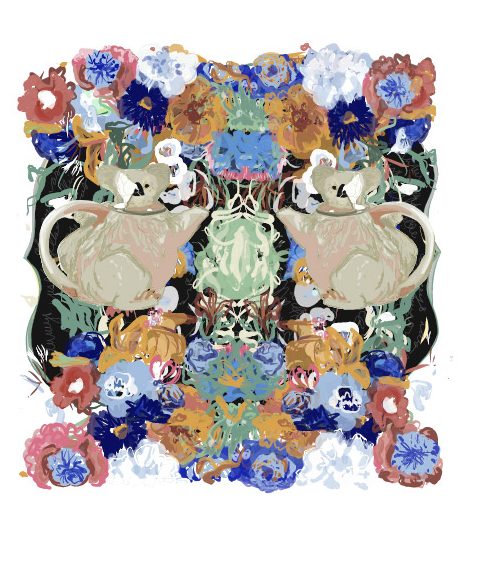
the author is now somewhere else pondering another shacks history with coffee and an Apple Pencil drawing linoleum…
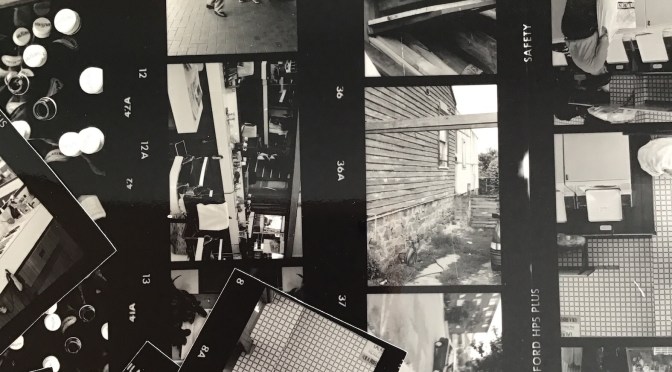
All contact sheets/photos by Jenny Potts (Barr) 1998 National Art School
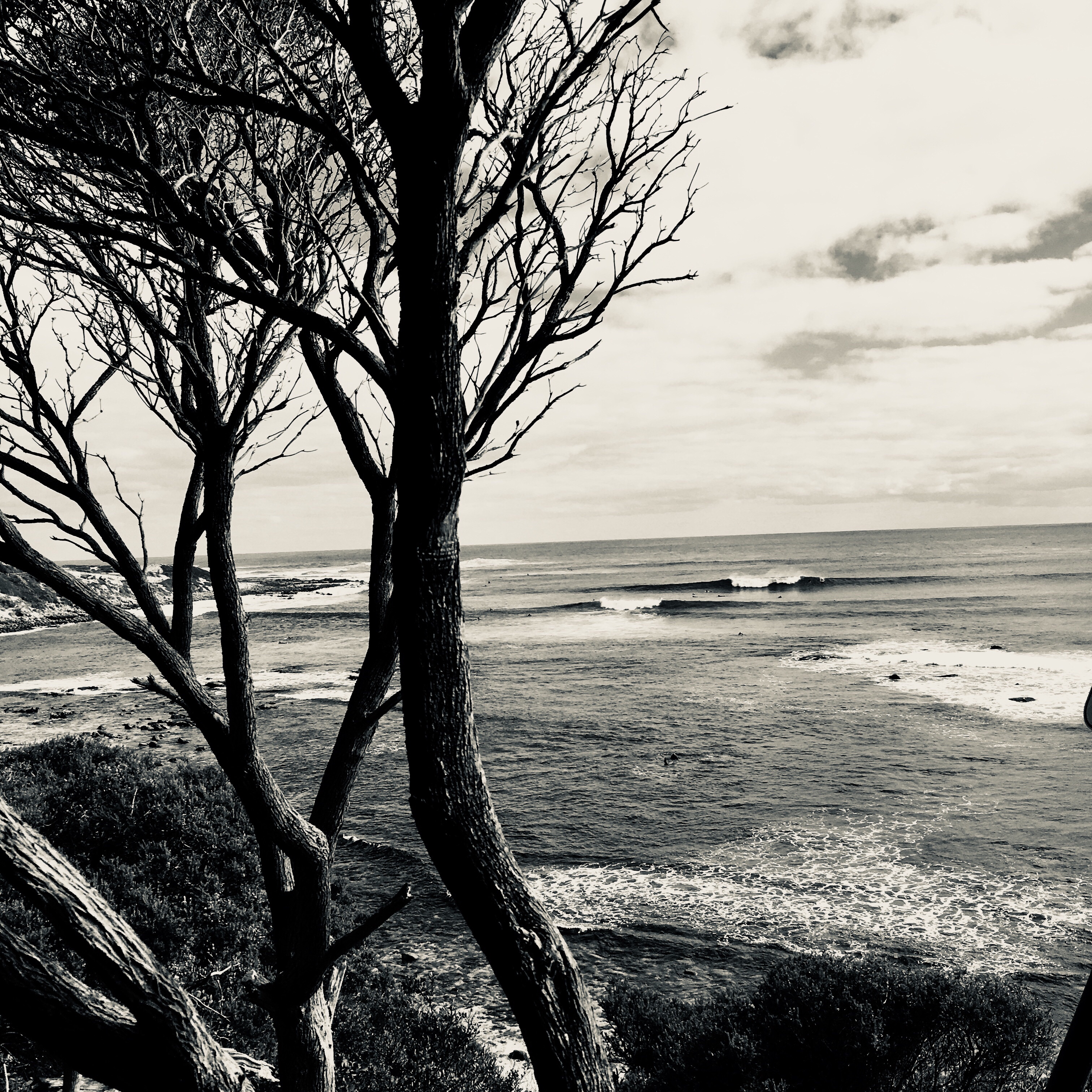 But Before this shack we went to buy a blank piece of coastal land and when we were given the original title paperwork, all flowy cursive and fairly indecipherable except for the iconic Crown stamp, my first thought was ‘this is the piece of paper that stole the land’ and the rest of the following thoughts were complex and fraught. I still have that piece of paper.



 Tarhairedjack toons and draws